Reliable plumbing repairs when you need them most.
From burst pipes and water heater breakdowns to stubborn drain clogs, our certified Fayetteville plumbers fix issues right the first time.
Fast Service Finder
Select your plumbing need
Fast plumbing dispatch across Fayette County.
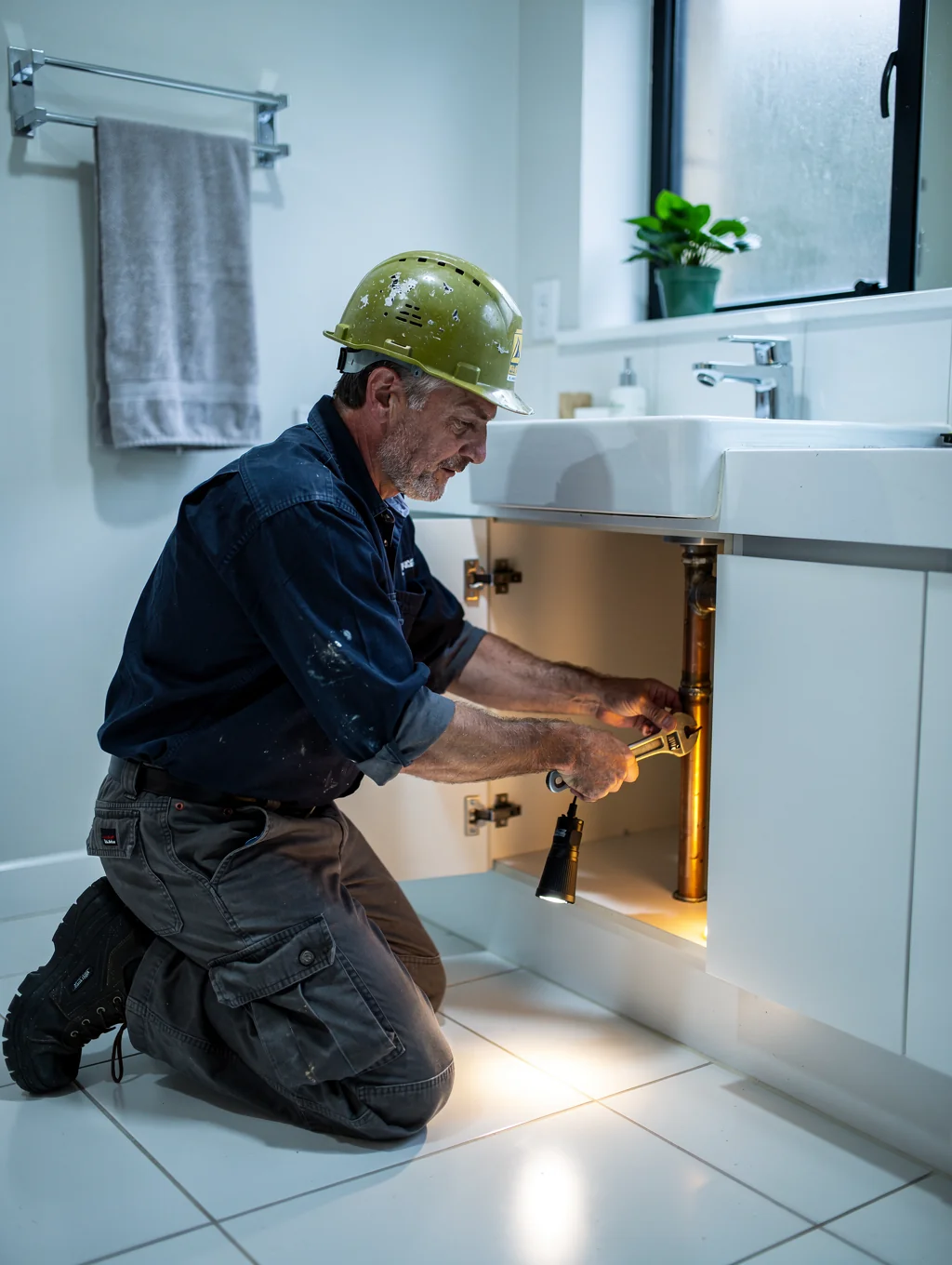
When pipes leak or drains back up, our licensed plumbers arrive ready to stop water damage and repair your home quickly.
Ready for urgent issues
Residential plumbing repairs & maintenance
Fast Arrival
Fayetteville & nearby
Why the hot water stopped
Losing hot water is disruptive, but the cause is usually easy to narrow down once you know where to look.
When the hot water disappears, the problem almost always sits in one of three places: the water heater itself, the power or gas supply that feeds it, or the plumbing that carries the hot water to your fixtures. A tank heater that has lost its heating element or burner will produce lukewarm or cold water, while a failed thermostat or tripped breaker can shut the whole system down without any visible warning.
The details matter. If only one faucet has no hot water, the issue is likely at that fixture. If every tap runs cold, the water heater is the first thing to check. Water that runs hot for a minute and then turns cold points to a different group of problems, such as a failing dip tube or a heater that is too small for your household. Telling us exactly what you notice helps us arrive prepared.
Because hot water is tied to safety as well as comfort, we recommend not ignoring signs such as water pooling near the heater, a burning smell, or a heater that keeps tripping the breaker. Those are reasons to call sooner rather than later, and we are happy to talk through what you are seeing by phone before we arrive.
What your hot water is telling you
Different symptoms point to different causes. Here are the patterns we hear about most from Fayetteville homeowners.
Every hot tap runs cold. This often means no power or gas to the heater, a failed heating element, a pilot light that went out, or a tripped breaker.
You get a few minutes of hot water and then it turns cold. Sediment buildup, a broken dip tube or one failed element in an electric heater are common causes.
The water is warm but not hot. The thermostat may be set too low, or a heating element or burner may be working only partly.
If only one faucet or shower is cold, a cartridge, mixing valve or fixture supply line is more likely to blame than the heater.
Sediment hardens at the bottom of the tank and traps steam bubbles, which can reduce efficiency and eventually cause the heater to fail.
Moisture around the base can mean a leaking tank, loose fitting or relief valve discharge. Tank leaks usually mean replacement, so call quickly.
The usual suspects behind a cold shower
Here is where we typically find the problem, and what the fix usually involves.
| Component | What you notice | Typical fix |
|---|---|---|
| Thermostat | Water too cool or inconsistent | Test and replace the thermostat or reset the high-limit switch |
| Heating element (electric) | No hot water or very short supply | Test the elements and replace any that have failed |
| Pilot light or igniter (gas) | Cold water with a pilot that keeps going out | Clean or replace the thermocouple, igniter or gas valve |
| Breaker or fuse | No power reaches the heater | Reset or replace the breaker and check for a tripped limit switch |
| Dip tube | Hot water cools quickly | Replace the cracked or disintegrated dip tube |
| Sediment buildup | Rumbling noises and slower recovery | Flush the tank, or recommend replacement on an aging unit |
Our no hot water repair process
We find the cause first so you only pay for what the heater truly needs.
We start with what you are seeing, then inspect the heater, power or gas supply and nearby plumbing.
We check temperature settings, elements, burner or igniter, valves and safety controls.
You get a clear explanation of repair versus replacement and a quote before work begins.
We make the repair, restore hot water and confirm temperature at your fixtures.
What affects the cost of restoring hot water
Prices vary because the cause varies. We give you a quote before starting.
| Factor | Why it matters |
|---|---|
| The failed part | A thermostat, element or igniter is a smaller job than a gas valve or tank replacement. |
| Electric or gas | Gas and electric heaters use different parts and need different safety checks. |
| Age of the heater | Older tanks may not be worth repairing when several parts are wearing out at once. |
| Tank condition | A leaking or corroded tank cannot be repaired and must be replaced. |
| Access and code needs | Tight closets, attic installations or required upgrades can add time to a repair. |
Quick checks that might restore hot water
These safe checks can save a service call. Do not open panels or work on gas lines yourself.
For an electric heater, check the panel for a tripped breaker. Reset it once. If it trips again, stop and call us.
On a gas heater, see whether the pilot is lit. Follow the instructions on the heater label only if you are comfortable, otherwise call us.
Make sure the thermostat has not been turned down or accidentally bumped to a low setting.
Run hot water at a few fixtures. If only one is cold, the heater is probably fine.
Check the floor and plumbing near the heater for moisture. If there is a leak, shut off the cold water supply to the heater.
The tag on the tank shows the manufacture date. Heaters past 10 to 12 years are more likely to need replacing.
When a new water heater is the better choice
A repair makes sense in many cases. These situations usually point toward replacement.
Tanks that are well into their second decade often fail again soon after a repair.
A leaking tank cannot be sealed safely and needs to be replaced before it causes water damage.
If you are repairing part after part, a new unit can be the more economical long-term choice.
Hot water repair across Fayetteville
We serve homeowners in Fayetteville and surrounding communities.
Fayetteville homes use a mix of gas and electric water heaters, and many are installed in garages, closets or attics, which can affect how a repair is done. Our plumbers are familiar with the common setups found in local homes and the part and code issues that come up with them.
We help customers in Fayetteville, Peachtree City and Tyrone, as well as other communities on our service areas page. For other heater problems, see our water heater repair, replacement and tankless water heater pages, or the full water heaters overview.
No hot water FAQ
Answers to the questions we hear most when the hot water stops.
Why do I have no hot water all of a sudden?
A sudden loss of hot water usually means a failed heating element, thermostat, pilot light, igniter or tripped breaker. A leaking tank can also be the cause.
Why does my hot water run out so fast?
Sediment buildup, a broken dip tube, or a failed element in an electric heater can all reduce the amount of hot water your tank can deliver.
Is it safe to relight a pilot light myself?
Only if you are comfortable following the instructions on the heater label. If you smell gas, leave the house and call your gas utility right away.
Should I repair or replace my water heater?
If the heater is fairly new and the problem is a single part, a repair usually makes sense. For older or leaking tanks, replacement is often the better value.
Can I fix a tripped breaker myself?
You can reset it once. If it trips again, do not keep resetting it. That points to an electrical or heating element problem that needs a professional.
How long does it take to restore hot water?
Many repairs are done in one visit. A full replacement takes longer, but we can usually explain the timeline once we have inspected the heater.
No Hot Water in nearby cities
Find the page for your city.
Get your hot water back
Call our Fayetteville plumbers or request service online and we will diagnose your water heater.