Trenchless sewer repair — no digging required
Fix broken or aging pipes underneath your lawn, driveway, and garden without destroying your yard. Our non-invasive epoxy pipe lining restores structural integrity fast.
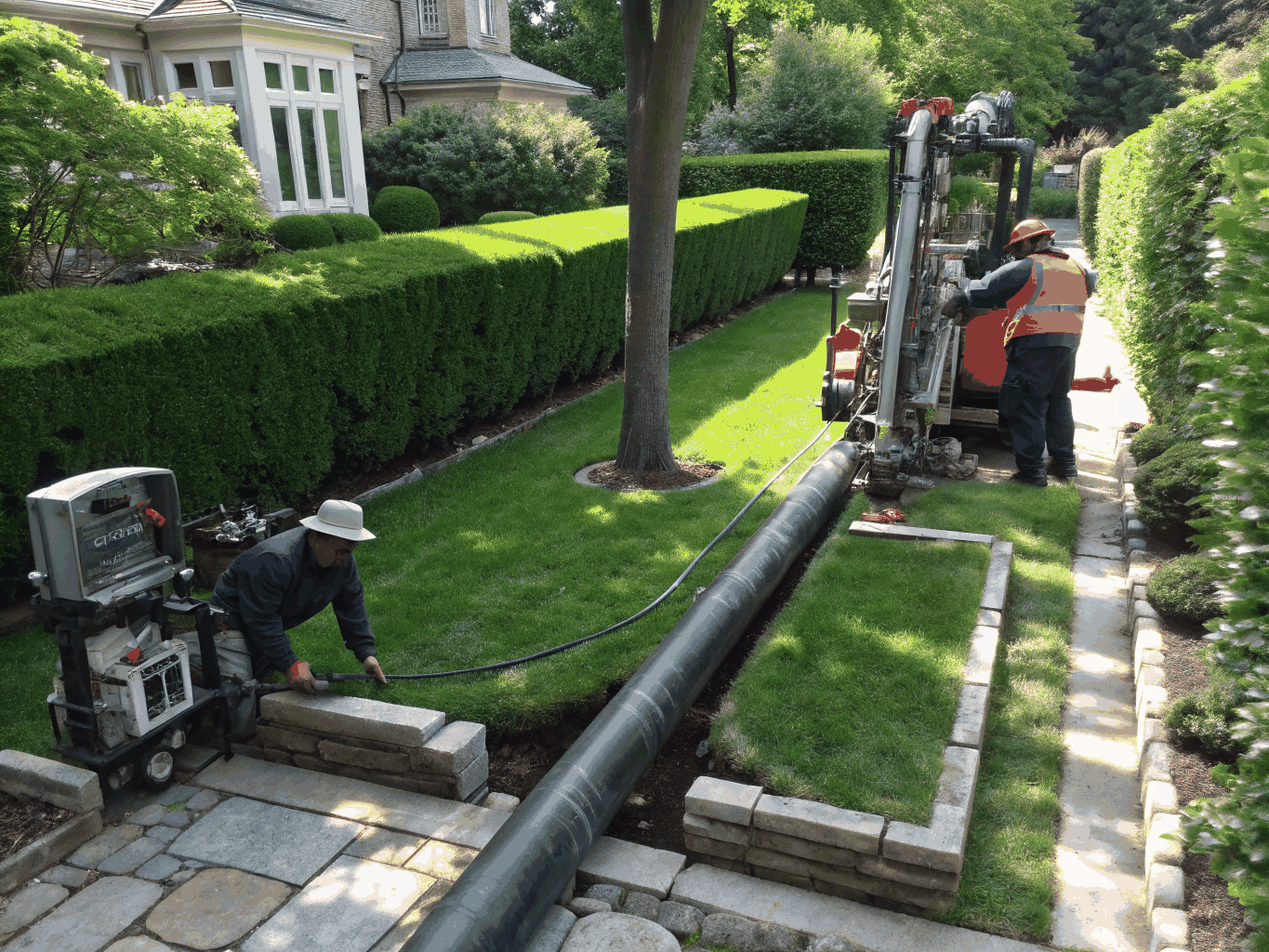
Zero Lawn Destruction
Repaired beneath the surface
Compare traditional excavation with trenchless pipe repair
See how modern trenchless technology restores damaged sewer lines faster, protects your property, and lowers overall restoration costs.
Keep your lawn, paved driveway, mature trees, and garden beds intact while we fix the line beneath.
Most residential pipe relining projects finish in hours, restoring running water and drainage quickly.
Avoid paying contractors to repave driveways, rebuild porches, or replace expensive lawn landscaping.
Epoxy resin and high-density poly pipe resist tree roots, corrosion, chemical wear, and future leaks.
Side-by-side comparison
How trenchless relining stacks up against open-trench digging for Fayetteville homes.
| Feature & Impact | Traditional Open-Trench | Trenchless Relining |
|---|---|---|
| Yard & driveway excavation | Full trench dug across lawn, driveway, or patio | One or two small access points only |
| Average completion time | 3 to 7 days with heavy equipment | Typically completed in 1 to 2 days |
| Landscape restoration costs | Often thousands extra for sod, concrete, and trees | Virtually zero landscape repair required |
| New pipe lifespan | 30 to 50 years depending on material | 50+ years with seamless epoxy or HDPE lining |
| Root intrusion resistance | Jointed pipes remain vulnerable over time | Seamless lining eliminates joint entry points |
Our 4-step trenchless restoration process
From initial camera scoping to certified flow testing, here is how we repair your underground line with zero lawn destruction.
We feed an HD fiber-optic camera through your line to pinpoint root blockages, cracks, or collapses without touching a shovel.
High-pressure water scouring clears out calcification, grease, scale, and roots, smoothing the old pipe to bond with the new liner.
We pull an epoxy-saturated sleeve into place and cure it solid, creating a brand new, joint-free structural pipe inside the old one.
A complete post-installation camera run confirms full curing, optimal flow rate, and seamless connection before we pack up.
Need a sewer line inspection in Fayetteville?
Book a sewer camera inspection today to find out if your line qualifies for trenchless repair.
Is trenchless sewer repair right for your home?
Trenchless methods can fix a damaged sewer line with far less digging, but they are not right for every pipe.
Trenchless sewer repair is a family of methods that repair or replace buried pipe through small access points instead of a long open trench. For the right pipe in the right condition, that can mean less disruption to your lawn, driveway and landscaping and a shorter project.
The word right matters. Trenchless methods depend on the pipe being able to accept a liner or a new pipe being pulled through. Collapsed sections, severe offsets, heavy bellies and some pipe materials can rule certain methods out. That is why a camera inspection comes first. It shows what the pipe actually looks like inside.
We tell you honestly whether trenchless is a good fit for your line, what it would involve and how it compares with open trench repair for your situation.
Signs your sewer line may need repair
These are the problems that most often lead homeowners to consider trenchless repair.
If clearing the line only helps for a short time, the pipe may be damaged.
Roots entering through cracks keep returning until the pipe is repaired.
Camera inspection that shows cracks or offsets points to a repair.
Multiple slow fixtures suggest a main line issue.
A leaking sewer line can soften the soil above it.
Leaks and breaks can release odors near the line.
Trenchless methods compared
Different methods fit different pipe conditions.
| Method | How it works | Best fit |
|---|---|---|
| Pipe lining | A resin-coated liner is placed inside the existing pipe and cured | Pipes with cracks or minor damage that are still structurally in place |
| Pipe bursting | New pipe is pulled through while the old pipe is broken apart | Lines that need full replacement with limited digging |
| Spot repair | A short section is repaired from inside the pipe | Localized damage |
| Open trench | The line is dug up and replaced | Collapsed pipe or major route problems |
| Camera first | The line is inspected before any method is chosen | Every project |
| Cleanout upgrade | Access points are added or improved | Most projects |
Our trenchless repair process
We inspect before we recommend.
We camera the line and record what we find.
We explain whether trenchless fits and compare it with open trench.
We clean the line and set up access points.
We complete the repair and confirm results with a final inspection.
What affects trenchless repair cost
Costs depend on the line and the method.
| Factor | Why it matters |
|---|---|
| Length of line | Longer repairs cost more. |
| Pipe condition | Heavily damaged pipe may rule out some methods. |
| Method | Lining, bursting and trench work differ in price and scope. |
| Access points | Where digging is needed affects the work. |
| Restoration | Landscaping and surface repair vary by method. |
How to prepare for trenchless work
A little preparation helps.
The camera tells us what methods are possible.
Warranty terms depend on the materials and method.
Know where digging will happen, even with trenchless work.
Water and drain use may be limited during the work.
We explain what applies to your project.
We want you to understand the plan.
How to choose
We recommend what fits, not what is trendy.
If the pipe holds its shape, trenchless can often work.
Severe damage may require digging.
We explain both so you can choose.
A closer look at trenchless projects
A trenchless project starts the same way every sewer repair should: with a camera inspection. We record the line and note where problems are, how long the damaged section is and what material the pipe is made of. Then we talk through what we saw.
If trenchless is a fit, we prepare the line by cleaning it so the liner or new pipe can go in properly. That may involve jetting or cutting roots. We set up small access points, often at the cleanout or a short excavation at each end of the repair.
During the repair, the liner is installed and cured or the new pipe is pulled through. We reconnect lateral lines and then inspect the result with a camera to verify that the line is clear and the repair is in the right place.
Because less digging is needed, yard restoration is often smaller. We explain what to expect for your property before we begin, including any access holes and how they will be restored.
If we find that trenchless is not right, we say so and explain why. Open trench replacement may cost more and disrupt more of your yard, but when a pipe has collapsed, it is the right answer.
Homeowners often ask how long a trenchless repair will last. Properly installed liners and new pipe materials are designed for a long service life, but results depend on the condition of the host pipe, the quality of the installation and what happens around the line over time. We explain what to expect for your pipe and the warranty that applies.
Finally, remember that a repair does not replace maintenance. Keeping grease, wipes and other debris out of the line and having it inspected from time to time helps any sewer line, new or old, keep working.
If you are buying or selling a home, a trenchless-ready inspection can also give you a clear picture of the sewer line. Knowing the pipe material, its condition and the likely repair path helps you plan, and we are happy to explain what the camera shows in plain terms before you make any decisions about repair.
x
x
x
Answers to common trenchless pipe repair questions
See how no-dig sewer and water line restoration works, what it costs, and why Fayetteville homeowners choose it over digging.
Frequently asked questions
Everything you need to know about no-dig pipe lining and replacement.
100% satisfaction guarantee
Every trenchless repair is backed by our local workmanship and material warranty.
Licensed & insured pros
Certified technicians trained in no-dig CIPP lining and pipe bursting methods.
Same-day inspection
High-definition camera diagnosis to verify if your pipes qualify for no-dig repair.
Need your sewer or water line checked?
Schedule a sewer camera diagnostic with our Fayetteville team. We will identify the exact issue and explain your no-dig options.