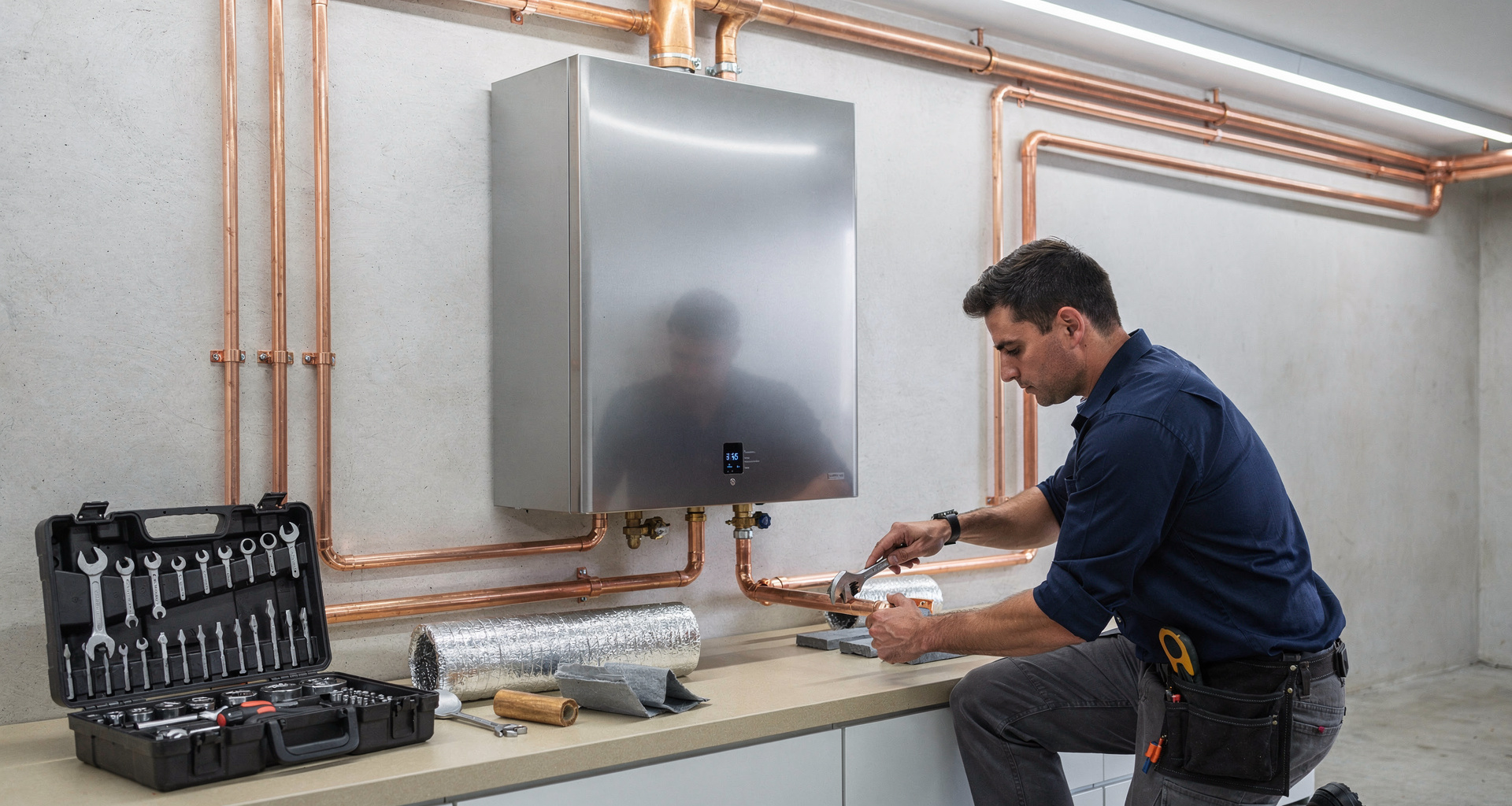
Water heater repair and replacement in Fayetteville, GA
Get your hot water running again today. We handle tankless upgrades, emergency element repairs, and complete replacements with upfront pricing and fast local dispatch.
Water heater services in Fayetteville
Get dependable hot water restored quickly with upfront pricing, honest recommendations, and service from local licensed plumbers.
Fix lukewarm water, pilot lights, leaks, and noisy heating elements before small issues damage your floors.
Replace aging or rusted tank units with properly sized systems backed by clear warranties and honest pricing.
Professional code-compliant setup for new construction and home additions across Fayette County.
Endless on-demand hot water and lower energy bills with compact gas or electric continuous-flow units.
Safe gas line connections, burner cleaning, thermopile replacement, and certified venting inspections.
Rapid thermostat checks, upper and lower element swaps, and high-recovery tank solutions for busy households.
Need urgent water heater repairs or leak containment?
Speak directly with our local Fayetteville dispatch team for fast same-day appointments.
Get dependable water heater service in Fayetteville
Speak directly with a local licensed plumber. We provide fast diagnostics, upfront pricing, and complete tank and tankless repairs across Fayette County.
Request Fast Service
Fill out the form below or call 24/7 for emergency dispatch.
Water heater services
Repair, replace or install.
Elements, thermostats, igniters, valves and leaks.
Diagnosis for heaters that stopped heating.
When a heater is too old or leaking to repair.
New tank or tankless installation done right.
Installation, repair and descaling.
Leaks and failures that cannot wait.
What to know about water heaters
A water heater is one of the hardest-working appliances in your home, and it usually goes unnoticed until it stops working. Knowing how yours works, how old it is and what warning signs to watch for helps you plan instead of reacting.
Tank water heaters store hot water and keep it ready. Gas models use a burner and need proper venting. Electric models use heating elements. Tankless heaters heat water on demand and need the right gas or electrical supply. Each type has its own common problems and its own maintenance.
Common repair problems include failed heating elements, bad thermostats, igniter and pilot problems, thermocouples, relief valve drips, sediment buildup and worn anode rods. Many are inexpensive to fix compared with replacing the heater. See our water heater repair page.
A leaking tank is different. Water coming from the tank itself means the steel has corroded through, and replacement is the usual answer. Shut off the water supply to the heater, turn off power or gas and call us.
How long does a heater last? Many tank heaters last around a decade, though it depends on water quality, maintenance and use. Our guide on how long a water heater lasts covers signs of aging.
Choosing between tank and tankless depends on your household, your space and your fuel. Our guide on tankless versus tank explains the tradeoffs, and our electric versus gas guide covers fuel type.
Size matters. A heater that is too small runs out of hot water, and one that is too large wastes space and money. See choosing a water heater size.
Maintenance helps. Flush a tank heater periodically to remove sediment, test the relief valve, look for leaks and set the temperature to a reasonable level. Our maintenance guide lists the steps.
Strange noises mean something. Popping and rumbling usually point to sediment. See our guide on water heater sounds.
We install, repair and replace gas, electric and tankless heaters. You get a clear quote before work begins, and we explain the options so you can decide what fits your home and budget.
For costs, see our water heater replacement cost and tankless water heater cost guides. For urgent leaks, see water heater emergency.
Safety first: a water heater combines water, heat, electricity or gas and pressure. The temperature and pressure relief valve is a critical safety part, and it should have a proper discharge line. If the valve drips, discharges or has been tampered with, call us. Never plug or cap a relief valve.
Gas heaters need proper venting so combustion gases leave the home. If you smell gas, see soot, notice a yellow flame or have a carbon monoxide alarm sound, leave the home and call your gas utility or emergency services. Do not try to relight a pilot repeatedly if it keeps going out.
Efficiency tips: insulating hot water pipes, setting a moderate temperature, fixing leaking hot taps and flushing the tank all help. Modern heaters are more efficient than older ones, so a replacement can lower energy use. Our guide on lowering your water bill covers more ideas.
Hard water is hard on heaters. Minerals build up as scale on elements and burners, shortening life and wasting energy. A water softener or regular flushing can help. See our guide on hard water solutions.
Plan the replacement. If your heater is old, rusting or has needed several repairs, a planned replacement is usually less stressful and gives you time to compare options. If it fails on a weekend, you have fewer choices.
What a visit looks like: we ask about the symptoms, inspect the heater, test the parts, explain the cause and give you a clear quote for repair or replacement. If a simple repair will do, we say so.
Water heater FAQ
How do I know if my water heater needs replacing?
Leaks from the tank, rust in the water, age and repeated repairs are common signs.
Why is there no hot water?
Common causes are a tripped breaker, a pilot problem, a failed element or thermostat, or sediment.
Should I choose tank or tankless?
It depends on household size, space and fuel supply. See our comparison guide.
How long does installation take?
Many standard replacements finish in one visit.
Will you quote before starting?
Yes. You approve the work and price before we begin.
Do you offer emergency service?
Yes. See our water heater emergency page.
Questions to ask about your water heater
How old is it? The label shows the manufacture date, and age is the best single predictor of when problems will start. Is it leaking, rusting or making noise? Those are signs that attention is needed. Is it the right size for your household? A heater that runs out of hot water may be too small or may be failing. Has it been flushed and inspected? Sediment is a quiet cause of problems.
Is the relief valve working and properly piped? Does the heater have an expansion tank if your system needs one? Is the venting correct on a gas model? Are the shutoff valves accessible and working? If you do not know the answers, we can check these items during a visit and explain what we find.
What are your options? For a failing heater, you can often choose between a like-for-like replacement, a larger or smaller tank, or a tankless heater. Each has advantages, and the best choice depends on your household, your space and your budget. We explain the options plainly and give you a written quote so you can compare.
What does the work include? A good installation includes removing and hauling away the old heater, new connections where needed, proper venting, a relief valve and discharge line, testing and a walk-through of the controls. Ask any plumber what is included before you agree to a price.
What happens after? We explain how to set the temperature, where the shutoffs are, what maintenance helps and what the warranty covers. Keep the paperwork, because it matters if you sell your home or need warranty service later.